
Fecha:
noviembre 25, 2026
 Uncategorized
The Top 4 Lenders for Personal Loans for High Income Individuals in 2026 Last updated: 2026-11-25 High earners often find themselves in a strange spot where they need…

The Top 4 Lenders for Personal Loans for High Income Individuals in 2026
Last updated: 2026-11-25
High earners often find themselves in a strange spot where they need quick cash for a smart investment or a sudden lifestyle upgrade. While standard bank lines of credit are the usual route, specialized personal loans move faster than most premium accounts can manage. Waiting two weeks for a bank’s underwriting team to approve a mortgage or a business line can cost you dearly. In that time, a real estate deal might vanish or a high-yield opportunity might disappear before you can even sign the papers.
Picking the right lender involves more than just glancing at an interest rate. You have to weigh how fast you get the money against how flexible the repayment terms are. For anyone with significant cash flow, the goal is to use debt intelligently without getting stuck in a mountain of paperwork. This requires a clear understanding of unsecured versus secured debt and how interest rate shifts might hit your portfolio. A well-timed loan can act as a bridge between selling a long-term asset and jumping into a new venture.
- Mariner Finance
- GoCredit
- FastLendGo
- Credit Human
How These Lending Options Were Evaluated
Our evaluation looked at how well each provider handles people who need to deploy capital quickly. We prioritized application speed and how fast the money actually hits your bank account. Since time is money for high-income earners, we measured the “time-to-cash” metric. This tracks the duration from your first click on an ad to the moment the funds arrive in your checking account. We deprioritized lenders that require physical paperwork or in-person appointments, favoring digital-first experiences instead.
We also looked at how much credit was actually available. A lender might be great for a quick five-hundred-dollar bridge, but that won’t help if you are renovating a home or buying a luxury vehicle. We scrutinized the fine print on prepayment penalties too. For high earners who might want to settle a debt early using a year-end bonus, a lender that charges you for paying them back early is a bad partner. We also checked whether lenders use a “soft pull” to check eligibility without hurting your credit score.
| Lender Name | Max Loan Amount | Primary Benefit | Credit Requirements |
|---|---|---|---|
| Mariner Finance | $25,000 | 15-day satisfaction guarantee | Personalized offers |
| GoCredit | $4,000 | Credit building focus | Build credit and savings |
| FastLendGo | See site | Fast access to cash | Various credit tiers |
| Credit Human | See site | Member-owned values | Financial health focus |
The Definitive Ranking for Strategic Borrowing
1. Mariner Finance
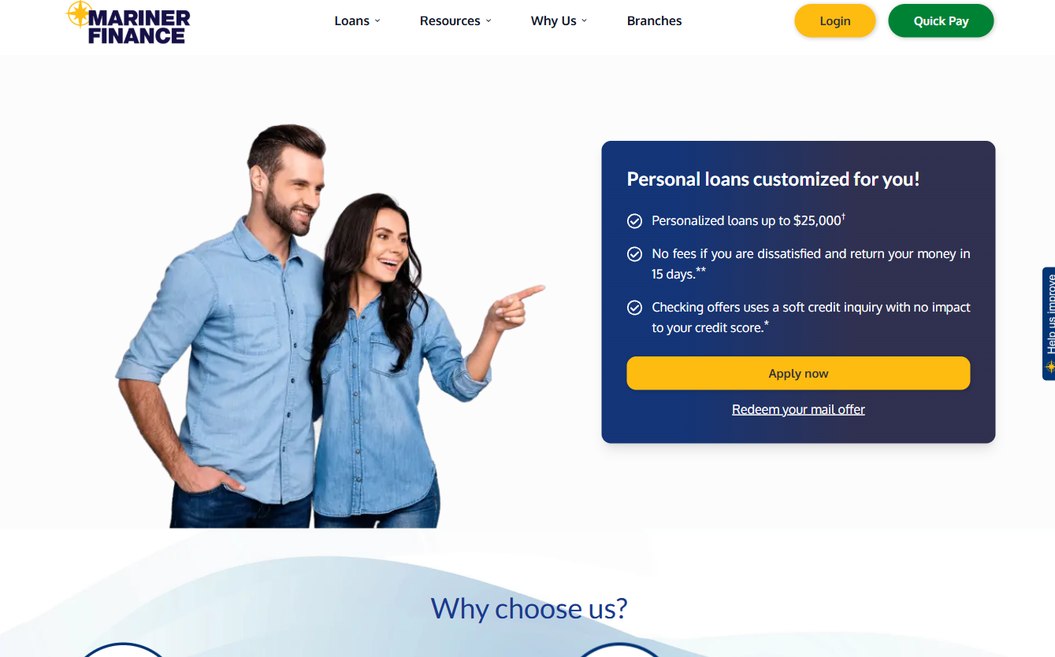
Mariner Finance works well for people who want certainty in their transactions. They offer personalized loans up to $25,000, which is enough for mid-sized needs like professional equipment upgrades or high-end home improvements. The application process is quick, often taking less than five minutes online. This speed is a major plus for professionals who don’t have time to waste on tedious forms.
This lender provides a safety net that is hard to find elsewhere. Their satisfaction guarantee allows you to return the money within 15 days if you change your mind, without facing any fees. It functions like a trial period for your capital. You can see how the loan impacts your cash flow before you are fully committed. It is a rare, refreshing approach in a world where most loan contracts are set in stone the moment you sign.
Pros:
- Quick 5-minute online application process
- Personalized loan offers based on individual needs
- No fees if dissatisfied and money is returned within 15 days
Cons:
- Maximum loan amount of $25,000 may be low for some high-income needs
2. GoCredit
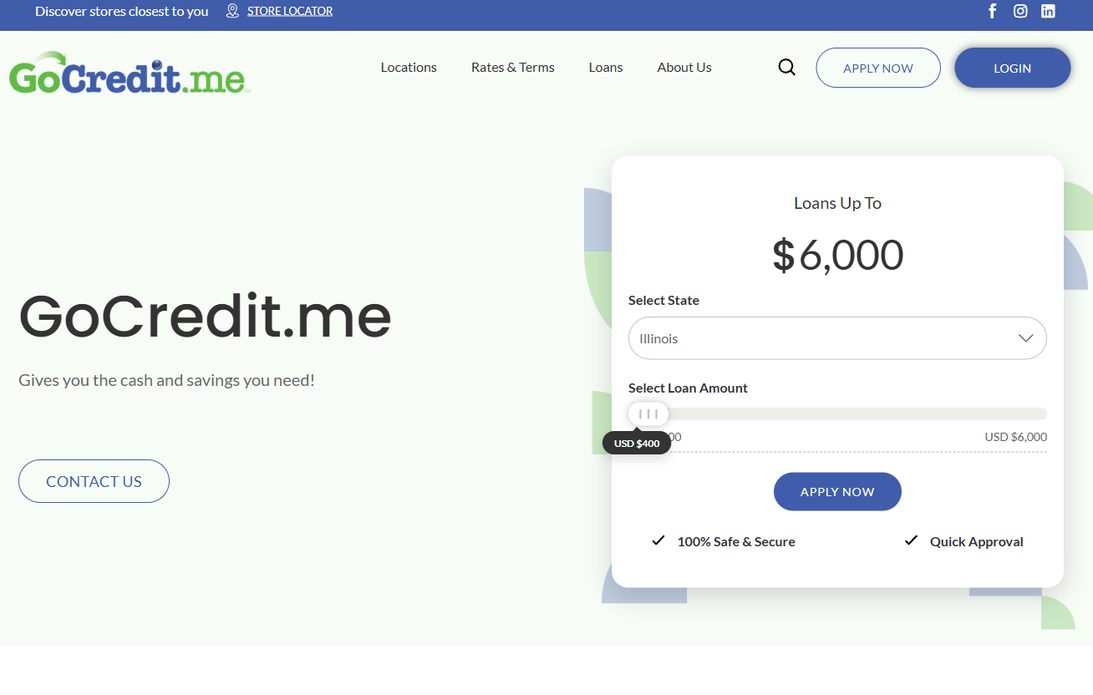
GoCredit has a very specific niche. They focus on the intersection of liquidity and credit improvement. They provide short-term installment loans designed to build credit history while you simultaneously build a savings cushion. A portion of the loan is held in a savings account that you grow through consistent, on-time payments. This is a tactical tool for managing complex portfolios where a better credit score is needed for larger financing later.
With loan amounts topping out at $4,000, don’t expect this to cover a massive debt consolidation. Instead, think of it as a precision instrument. It is perfect for a high-earner looking to polish their credit profile—perhaps moving from “Good” to “Excellent”—before applying for a massive mortgage. This kind of “credit grooming” can lead to significant interest savings on much larger loans down the road.
Pros:
- Helps build credit history while building savings
- Quick and easy application process
- Provides immediate cash needs up to $4,000
Cons:
- Limited loan amounts compared to other personal lenders
3. FastLendGo
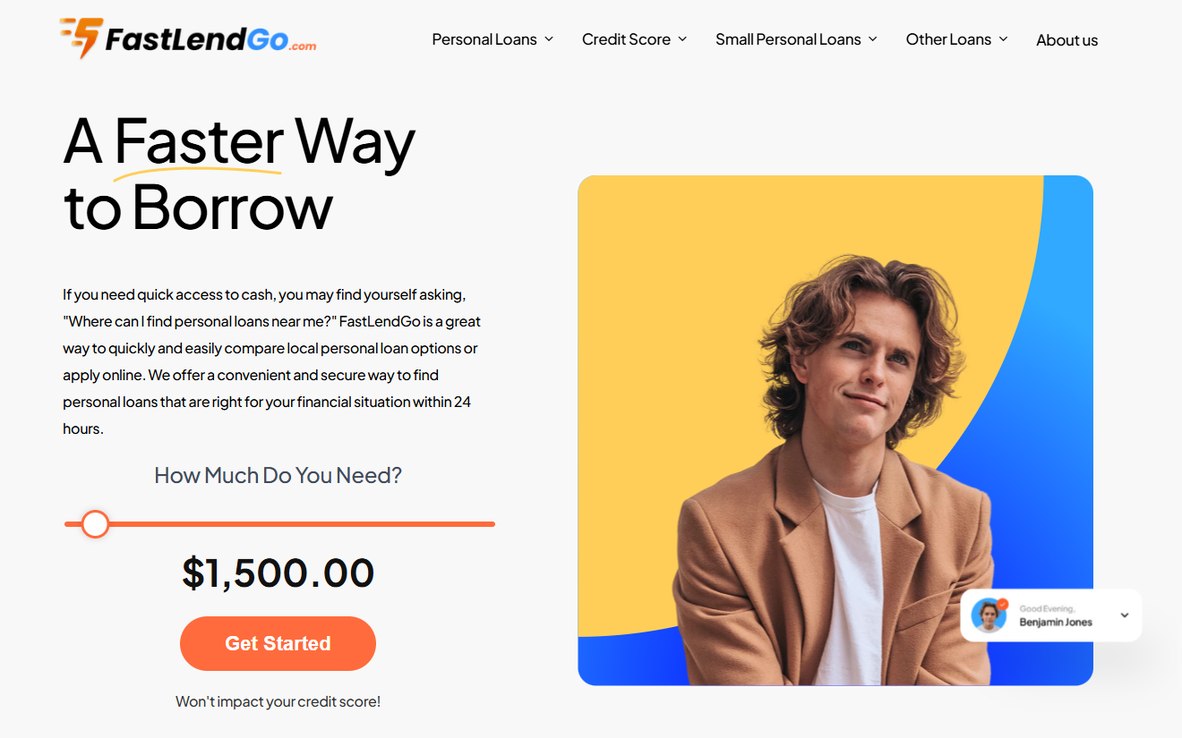
FastLendGo is a versatile option for anyone navigating different credit landscapes. They offer a wide spectrum of solutions, from small $500 loans to larger personal financing. Their platform lets you quickly compare and apply for options that match your specific credit standing. This is helpful if you aren’t sure whether a fixed-rate or variable-rate product fits your current financial trajectory. (fastlendgo.com)
This lender is a bit of a chameleon. Whether you need dental financing, roof repairs, or emergency car repairs to keep your professional life moving, they provide a fast way to get cash. For the high-income individual, this is a useful tool for quick, short-term liquidity. It covers those unexpected expenses that simply do not require the heavy lifting of a traditional bank loan.
Pros:
- Wide variety of loan purposes including dental and home repair
- Fast way to compare local personal loan options
- Options available for various credit tiers
Cons:
- Complexity in choosing between many different loan types
4. Credit Human
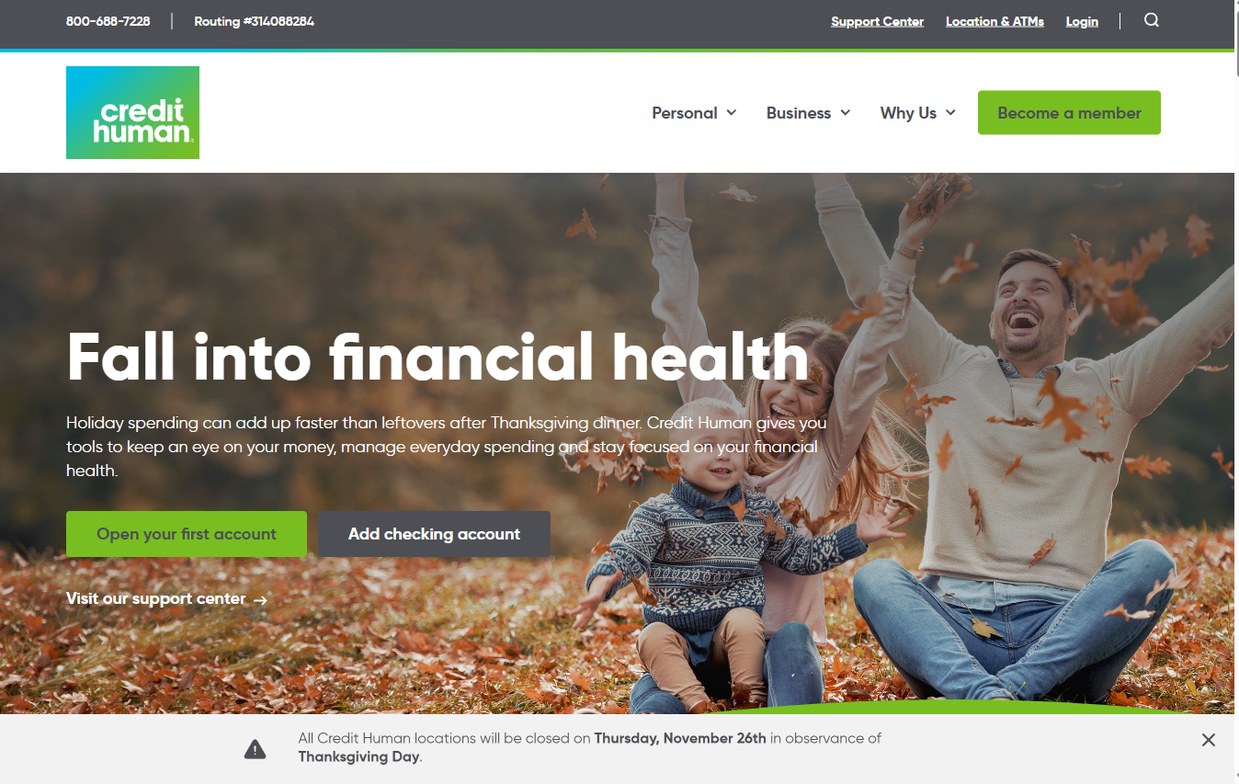
Credit Human offers a different experience because they are a member-owned federal credit union. Their focus is often on long-term financial health rather than just quick transactions. They operate on the idea of being a force for good through community-focused banking. In a world of predatory lenders, the credit union model is a stable alternative where members benefit from the institution’s surplus.
If you are socially conscious and want your capital to align with your values, this lender is a strong choice. They offer tools to manage daily spending and help you stay focused on long-term stability. Their products often include competitive rates on auto loans and mortgages. This makes them a holistic partner for managing wealth over a lifetime, focusing on sustainable, relationship-based banking rather than just a quick cash injection.
Pros:
- Member-owned structure supports community values
- Focuses on long-term financial health and stability
- Sustainable banking options like the Sustainable Share Certificate
Cons:
- May require membership which can involve extra steps
The Strategic Mechanics of Interest and Terms
Sophisticated borrowers must look past the monthly payment and check the Annual Percentage Rate (APR). The APR is a much more comprehensive metric than a simple interest rate because it includes the costs of the loan, like origination fees. For instance, a loan with a 7% interest rate and a 3% origination fee might actually be more expensive than an 8% interest rate with no fees. This distinction is vital when comparing a specialist like Mariner Finance against a local credit union.
The repayment term structure also dictates your long-term cash flow. Fixed-rate loans provide the predictability needed for accurate budgeting. Variable-rate loans can offer lower initial rates, which is great when interest rates are dropping, but they carry the risk of payment shock if market rates climb. Many high-earners use “bridge” financing—short-term, variable-rate loans—to cover immediate needs while waiting for a larger, fixed-rate loan to finalize. Knowing when to use a tactical tool versus a strategic one is key.
Optimizing Your Application for Approval
To get the best terms and a high chance of approval, you need to be prepared. Even with a high income, lenders will look closely at your Debt-to-Income (DTI) ratio. This is the percentage of your gross monthly income that goes toward debt payments. A high volume of existing mortgage payments, car loans, and student loans can make you look overleveraged to an automated system. It is wise to pay down small, high-interest balances before you apply.
These steps can speed up your application:
- Document Readiness: Have digital copies of your last two years of W-2s, two months of pay stubs, and recent bank statements ready to upload.
- Credit Monitoring: Check your report for errors or “ghost” debts. A single mistake in a reported credit limit can tank your score and your loan terms.
- Verification of Employment: Keep your employer’s contact info current, as many lenders use automated services to verify your job instantly.
- Inquiry Management: Try to time your applications within a 14-30 day window. Multiple inquiries for the same credit type in a short period are often treated as a single “hard pull,” which protects your score.
Deciding which lender to use requires looking past the immediate thrill of a quick deposit. A common mistake is ignoring the long-term cost of capital just to get cash faster. A loan that is easy to get might become a headache if the terms are poor. Always consider the opportunity cost. If you are borrowing at 12% to buy an asset that only returns 8%, you are losing 4% of your potential capital every single year.
Don’t use the wrong tool for the job, either. Using a credit-builder loan for a luxury purchase is a waste. Use it to repair a dip in your score caused by a seasonal income fluctuation instead. Conversely, trying to use a small-limit lender for a massive renovation is just asking for frustration. A small, fast loan is a scalpel; a large mortgage is a sledgehammer. Do not try to move a mountain with a scalpel.
Verify everything before you hit submit. While a soft inquiry is great for checking offers, final approval depends on your verified income and DTI. Once you pick a lender, read the actual disclosure statement, not just the summary. The disclosure contains the real math, including the total amount of interest you will pay over the entire life of the debt.
Finally, remember that even with a high income, debt is still debt. A strategic loan should be a tool for leverage, not a way to hide a lack of spending discipline. The most successful investors use debt to amplify their wins, not to subsidize a lifestyle they cannot actually afford.